
The Game Isn't the Only Goal
The scoreboard tells us who won today. It doesn't tell us who these kids will become. Here's what youth sports are actually for.
July 26, 2026
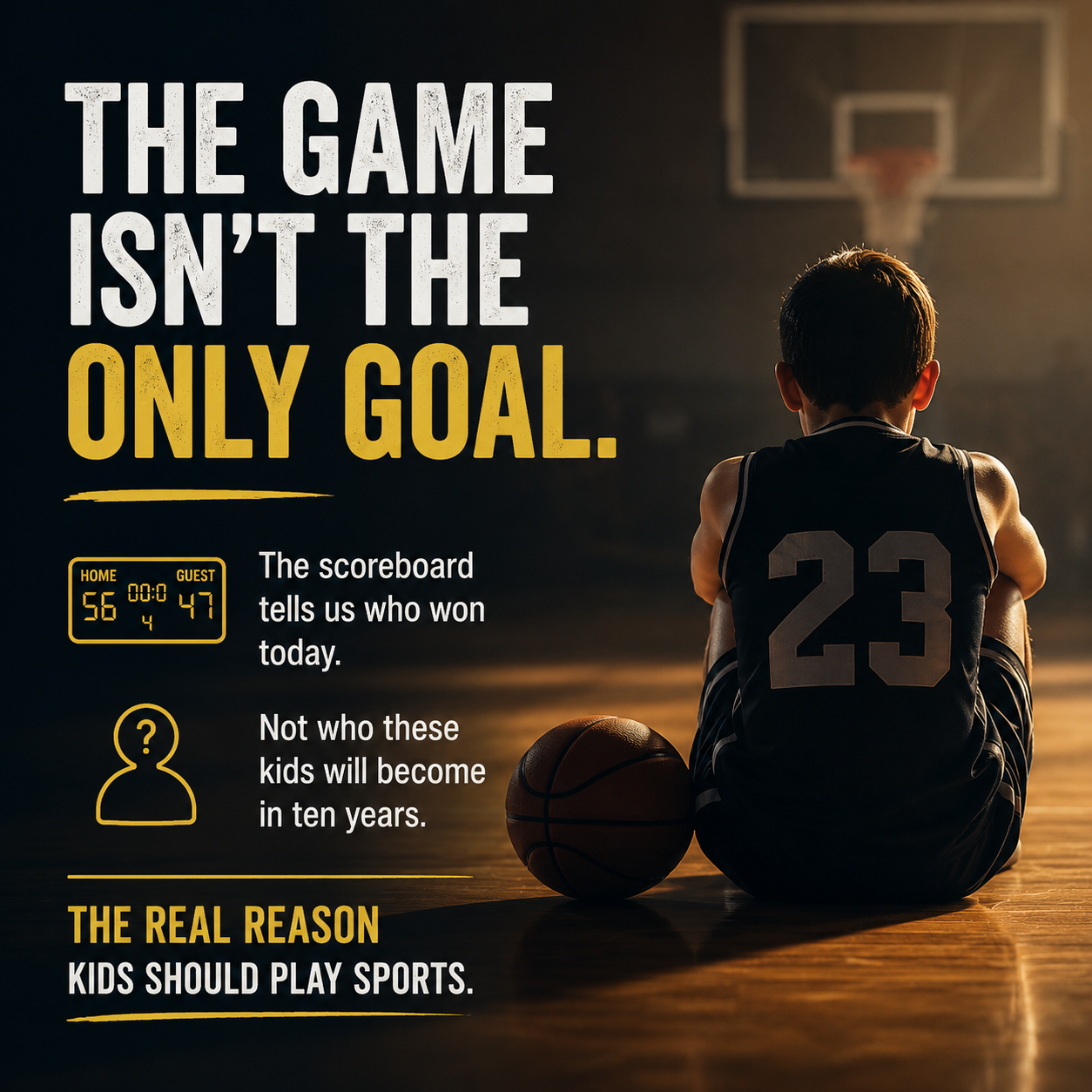
Youth sports were never meant to be just about winning.
The scoreboard tells us who won today. It doesn't tell us who these kids will become in ten years.
What Actually Lasts
Think ahead a decade. The trophies will be collecting dust in a closet. The scores will be forgotten. Most games will blur together into a single memory of gyms and car rides and orange slices.
But the lessons stay.
That's the trade every family is really making when they sign up for a season — not a shot at a banner, but a few years of a kid learning things that are genuinely hard to teach any other way.
1. Learn to Work for Something
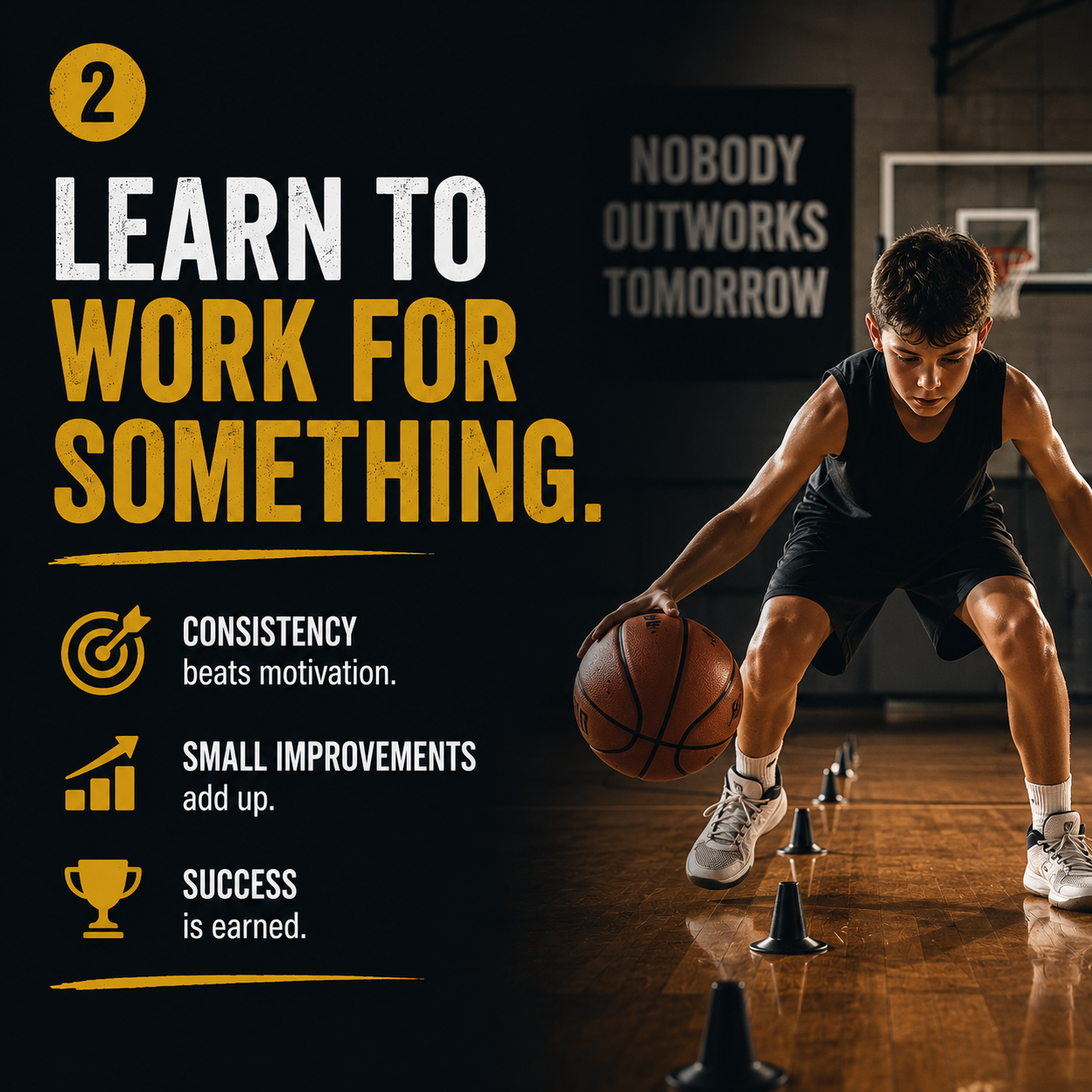
Consistency beats motivation. Motivation shows up on the good days. Consistency is what puts a kid in the gym on the days it isn't fun, and that's where almost all of the progress actually comes from.
Small improvements add up. Nobody gets meaningfully better in a week. They get better across a hundred sessions that each felt like nothing at the time.
Success is earned. A kid who wants to make the team next year and spends the off-season working toward it is learning the single most transferable skill there is: effort compounds, and you can direct it.
2. Learn to Do Hard Things and Handle Failure
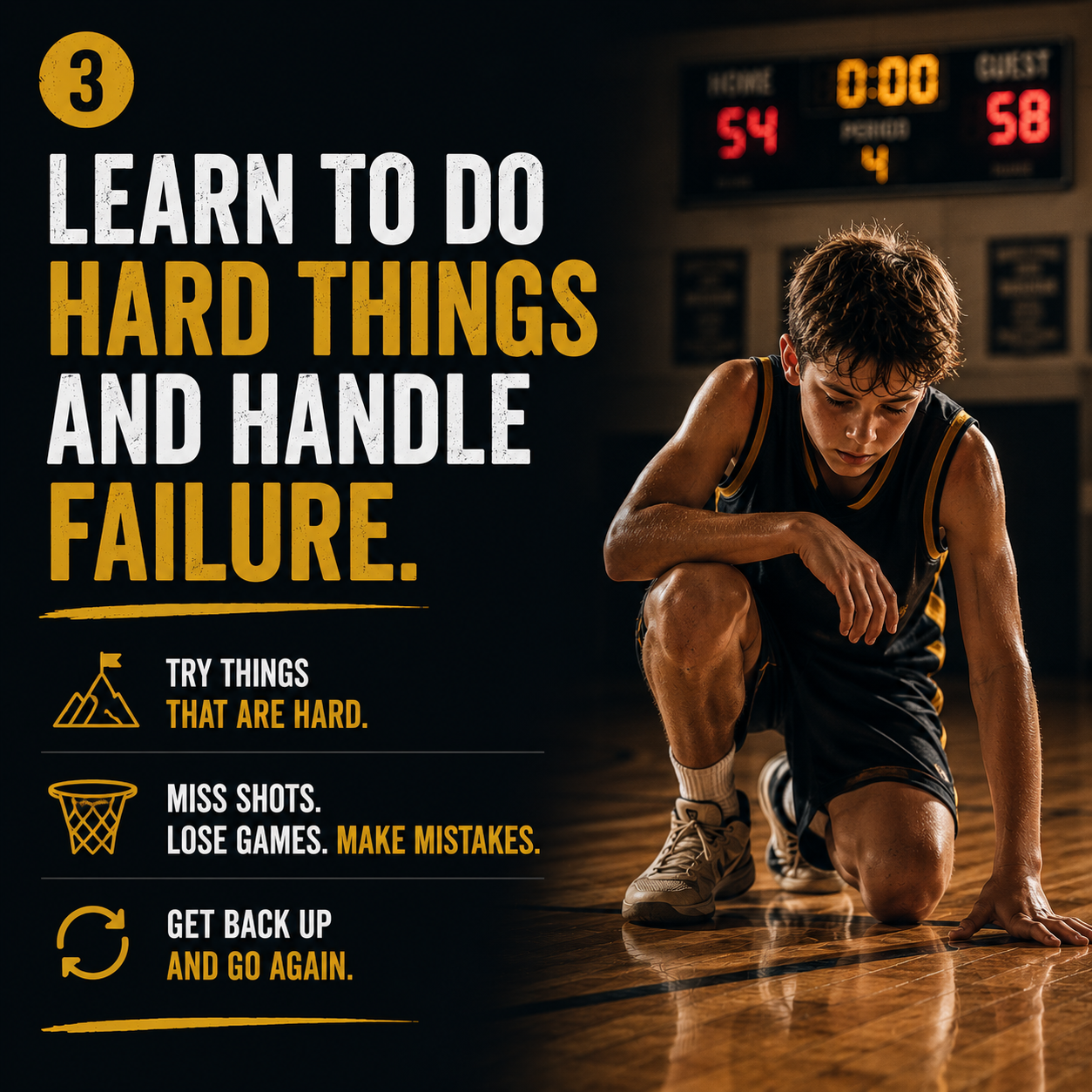
Try things that are hard. Conditioning at the end of practice. Guarding the best player on the floor. Taking the shot instead of passing it off. None of it is comfortable, and that's the point — kids who repeatedly do things they didn't feel like doing stop treating discomfort as a stop sign.
Miss shots. Lose games. Make mistakes. This is the part you can't simulate anywhere else. You lose. You get cut. You miss with the game on the line and everyone sees it.
Get back up and go again. Then you come back to practice on Tuesday. Sports give kids failure in small, survivable doses, on a short schedule, surrounded by people who've been through it. That's an unusually kind training ground for something they'll face their whole lives.
3. Learn to Be on a Team: To Lead and To Follow
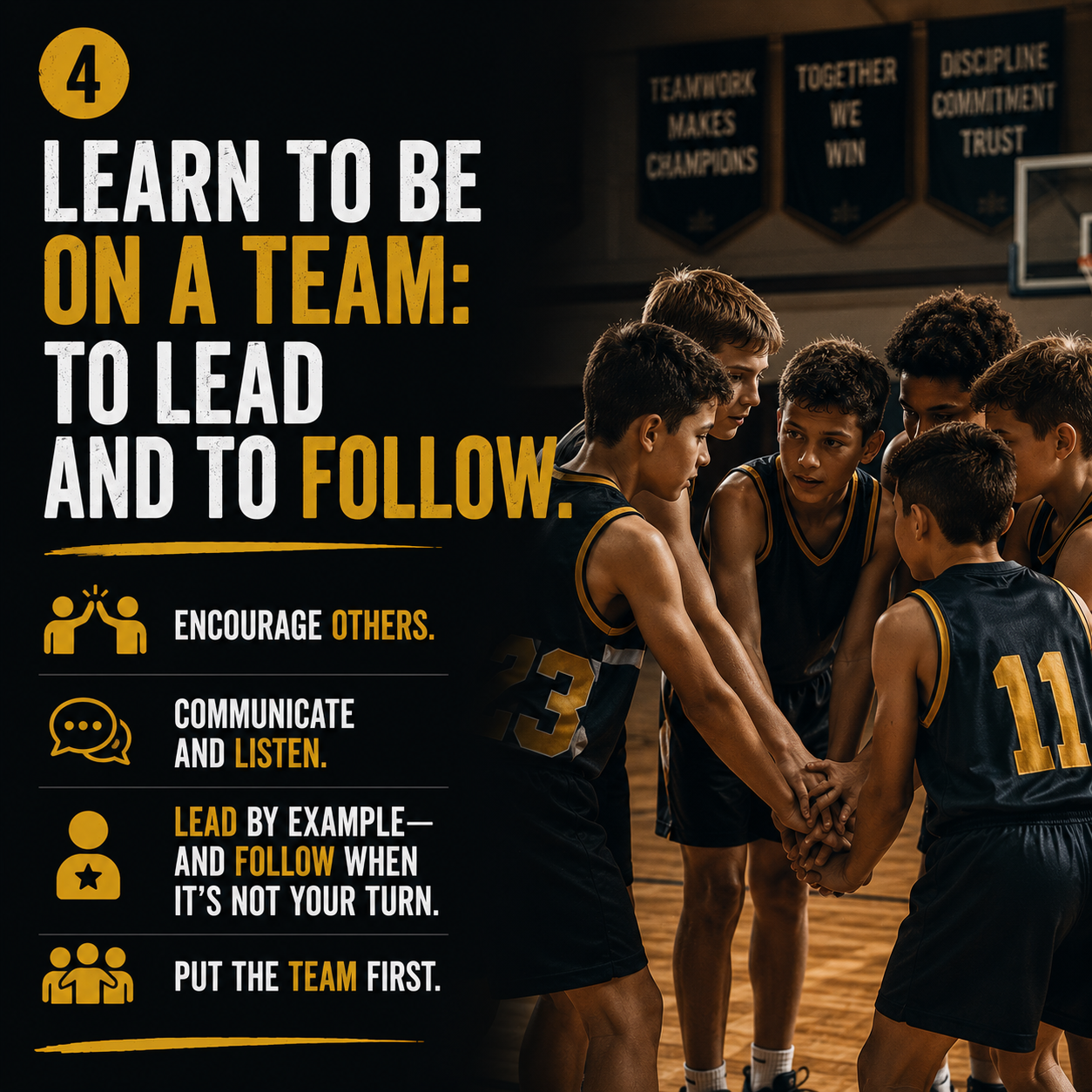
Encourage others. Being the person teammates want in the huddle when things are going badly is a skill, and it's one that gets noticed long before anyone checks a stat line.
Communicate and listen. Calling out the screen. Taking the correction without getting defensive. Both directions matter.
Lead by example — and follow when it's not your turn. This is the half that usually gets skipped. Every kid hears "be a leader." Far fewer learn to buy in when someone else has the floor, to set the screen they don't get credit for, to stay engaged from the bench. Knowing which role the moment calls for is the actual lesson.
Put the team first. These aren't basketball skills. They're the skills that determine whether someone is worth working with — at nineteen, at thirty-five, at any point after the last game they ever play.
4. Build Healthy Habits
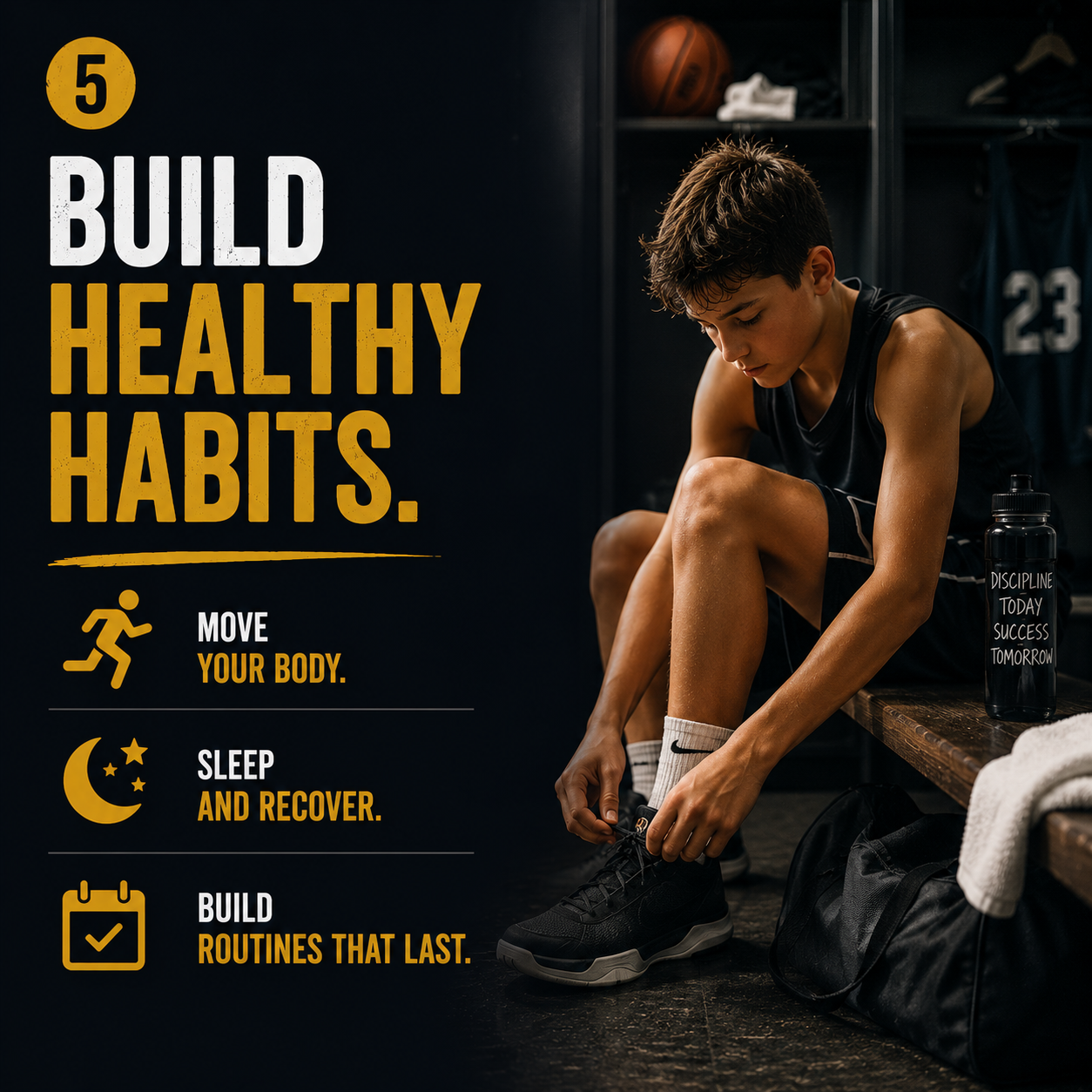
Move your body. Sleep and recover. Build routines that last.
Sports attach these to something a kid actually cares about, which is why they stick when a lecture wouldn't. A twelve-year-old who goes to bed early because there's a game tomorrow is practicing something they'll need long after the games stop.
5. Build Real Confidence
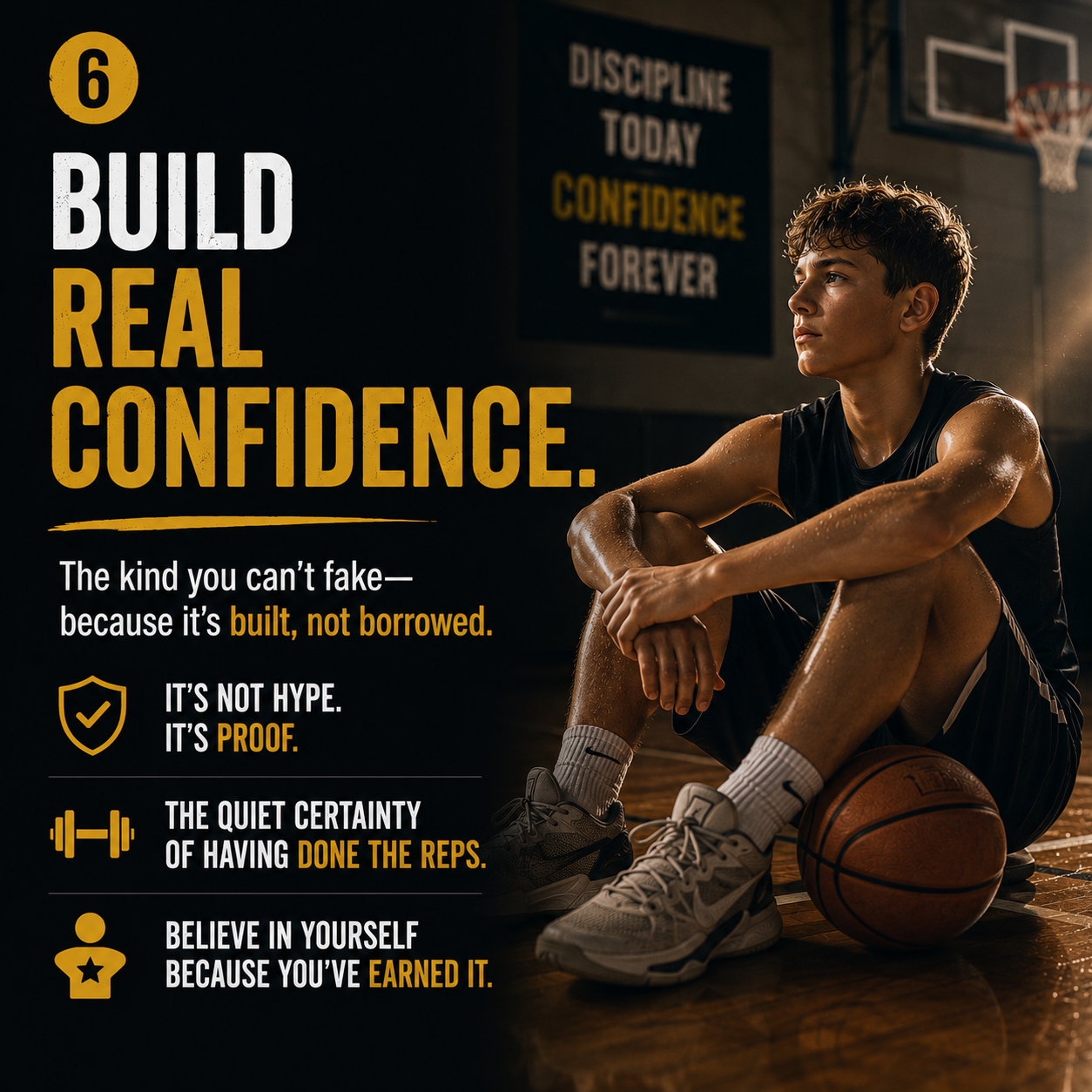
The kind you can't fake — because it's built, not borrowed.
It's not hype. It's proof. You can't hand a kid confidence with praise. They can tell the difference.
The quiet certainty of having done the reps. Real confidence is evidence-based, and the evidence is the work. A kid who can do something today they couldn't do six months ago knows exactly what it cost.
Believe in yourself because you've earned it. That belief holds up under pressure, because it isn't borrowed from anyone else's opinion.
What This Means for Parents and Coaches
If those lessons are the point, a lot of common decisions look different.
- Choosing a team. The best fit isn't always the most competitive one. Ask which environment will actually teach your kid these things — sometimes that's a strong program, sometimes it's a coach who'll give them real minutes and real responsibility.
- The car ride home. "Did you have fun? What did you work on?" travels further than a play-by-play of what went wrong.
- Playing time. It matters, but as an input to development, not as a verdict on your kid.
- Losing seasons. A season spent losing while a kid learns to compete, lead, and keep showing up is not a wasted season.
One Day, Every Child Will Play Their Last Game
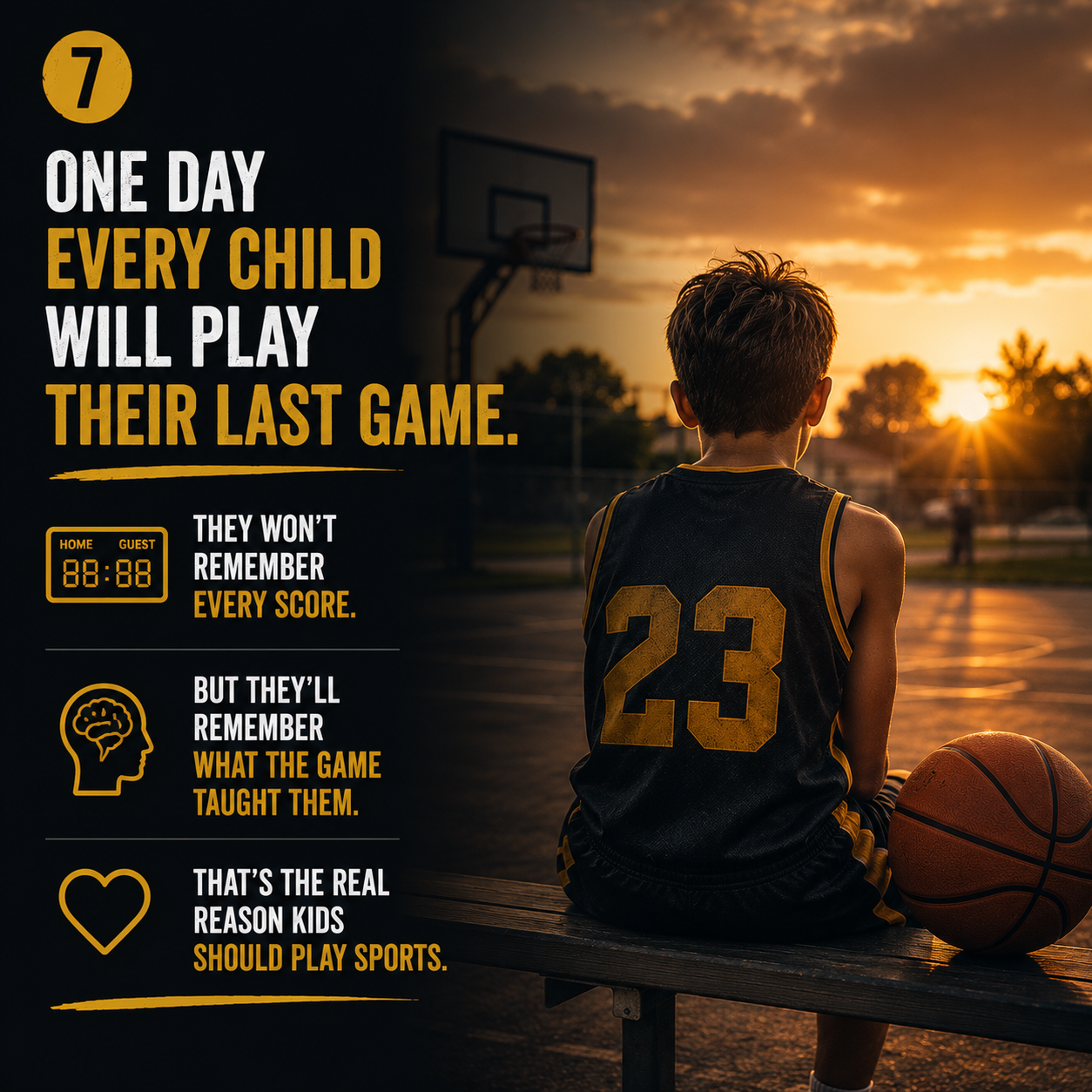
Most kids don't know it's their last one while they're playing it.
They won't remember every score. But they'll remember what the game taught them.
Our job isn't just to develop better athletes. It's to help develop better adults.
That's the real reason kids should play sports.
Ready to Find Tryouts?
Browse our directory of upcoming AAU basketball tryouts in Washington State.
Find Tryouts Near Me