
Call What Creates Advantage. Teach What Doesn't.
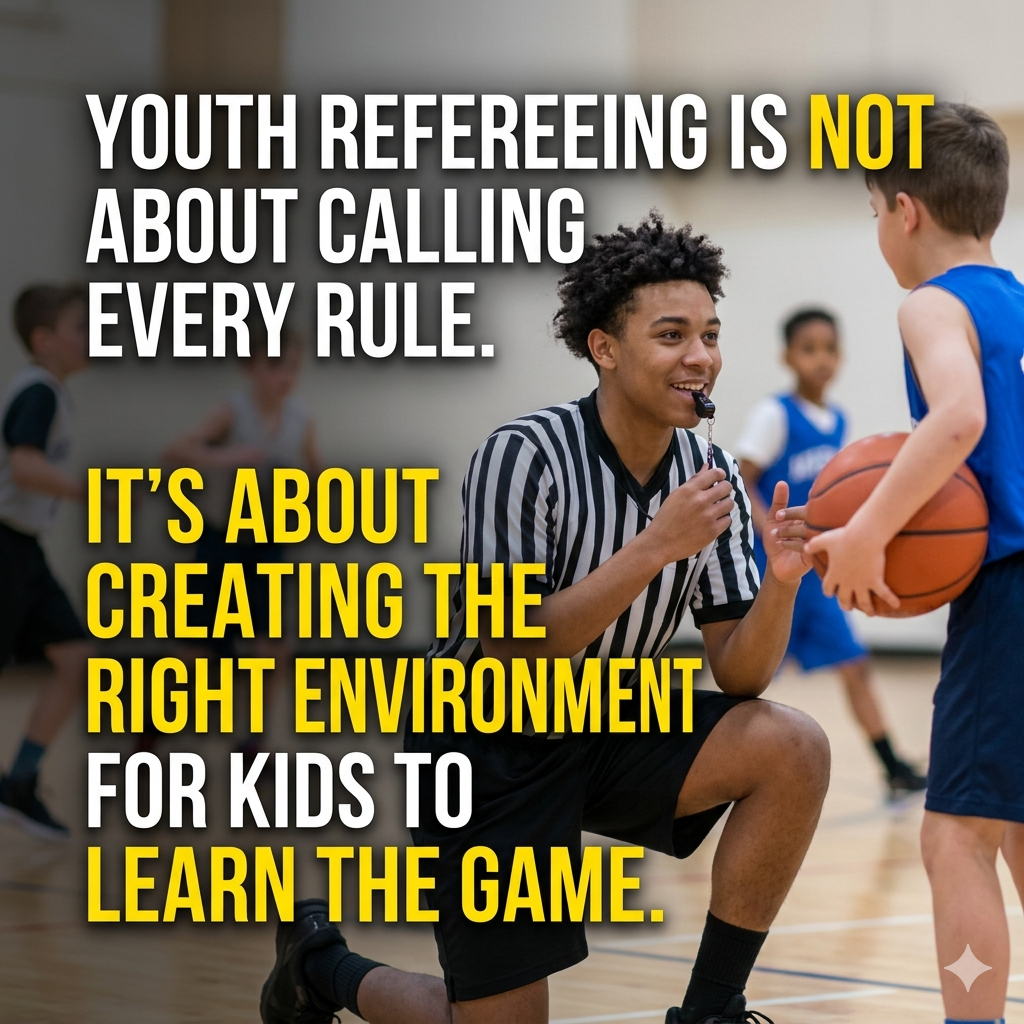
Youth refereeing isn't about calling every rule perfectly. It's about creating the right environment for kids to learn the game.
March 22, 2026
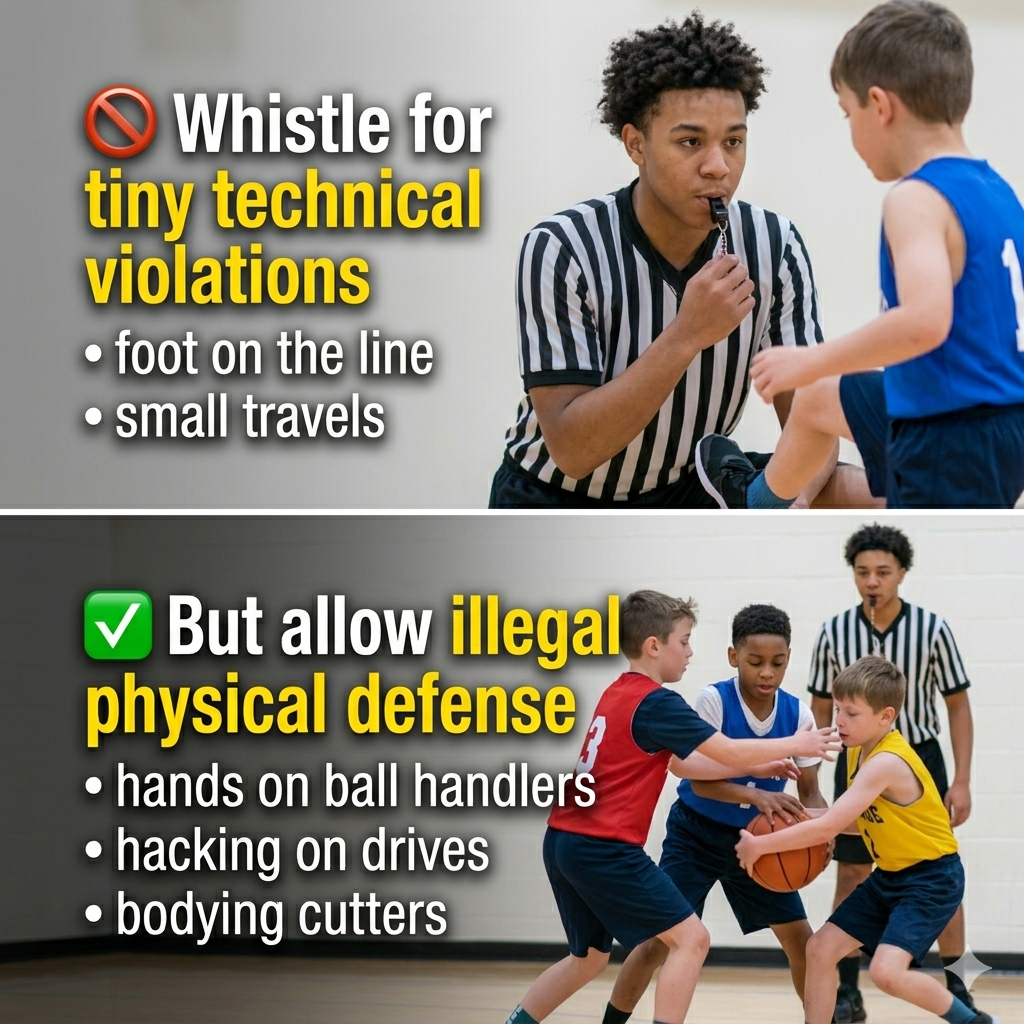
Youth refereeing isn't about calling every rule perfectly.
It's about creating the right game environment for kids to learn.
The Right Priority Stack
When a referee steps onto a youth court, there are dozens of things they could call. But the best youth officials know that not all calls are equal — and that the order in which you prioritize your whistle matters more than how many rules you've memorized.
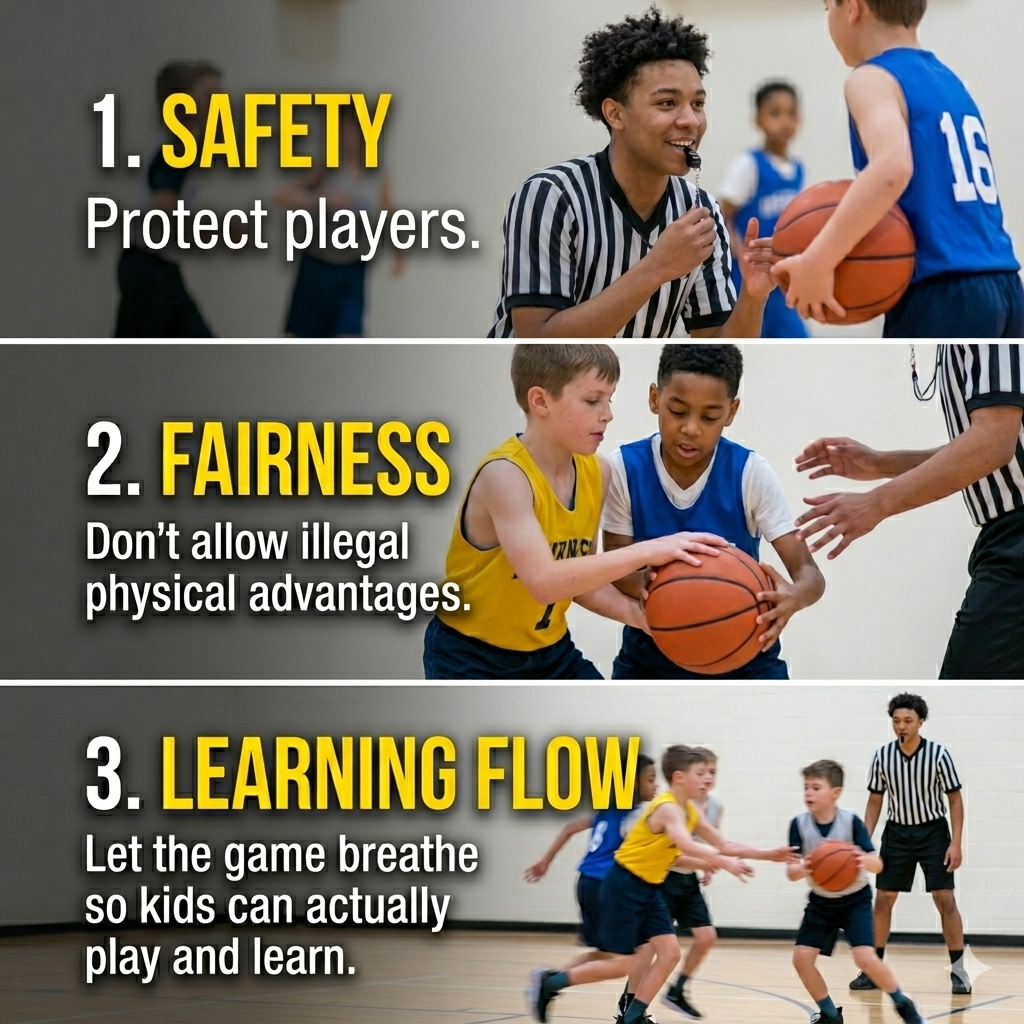
1. Safety
Stop dangerous or overly physical play. This is non-negotiable. Any contact that puts a player at risk of injury — elbows flying into faces, hard fouls in transition, knees-up screens — comes off the floor immediately. No hesitation.
2. Fairness
Don't allow illegal physical advantages. Grabbing a jersey. Hacking a ball handler on every drive. Using your body to push a smaller player off the block. These aren't minor technicalities — they fundamentally decide who wins and who loses before the skills of the players even come into play. Letting them go "to keep the game moving" isn't neutral. It's choosing a side.
3. Learning Flow
Once safety and fairness are protected, let the game breathe. Over-officiating kills development. Kids need to work through defensive pressure, read situations, make mistakes, and figure things out in real time. That only happens when the game flows.
The Pattern That Hurts Kids
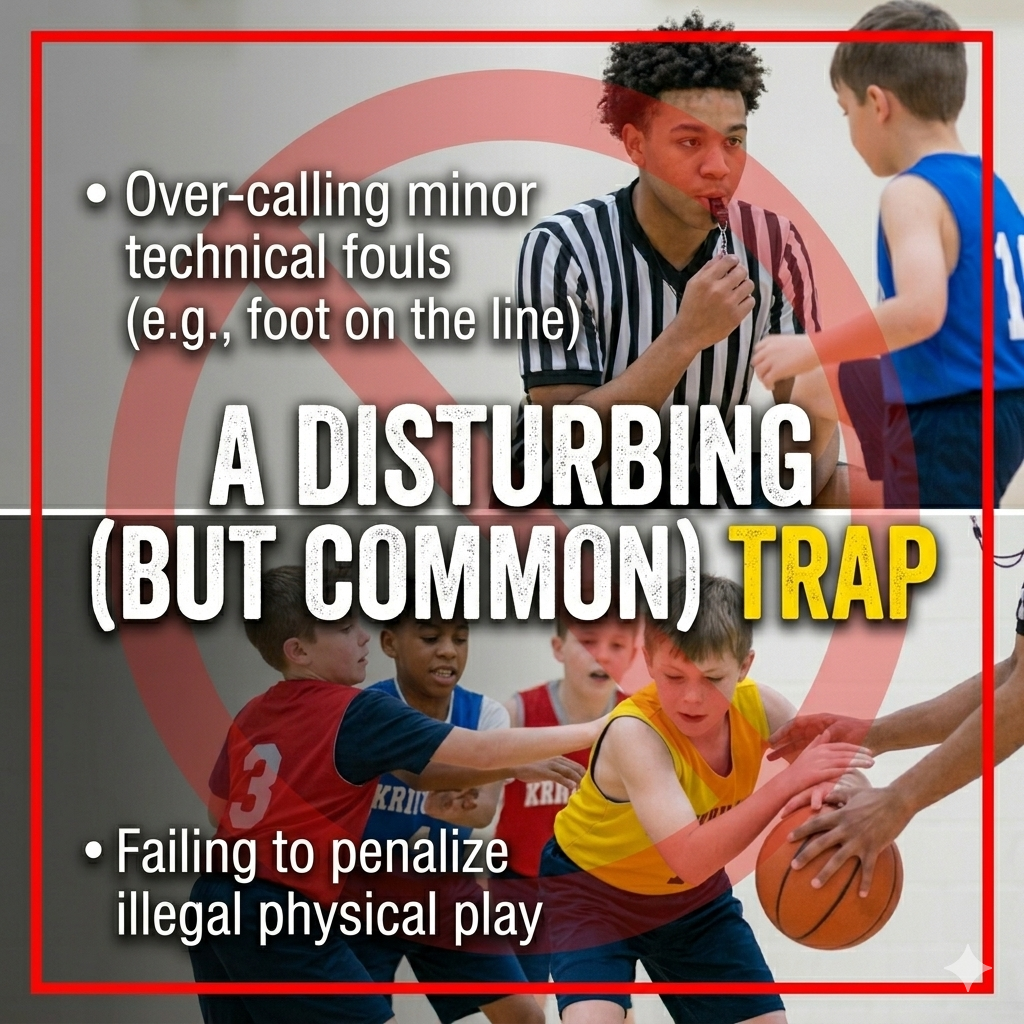
Too often youth games fall into the opposite pattern of what they should be:
- Whistling every tiny technical violation — a foot on the line, a borderline travel, an ambiguous carry
- While letting aggressive, illegal defense go entirely uncalled
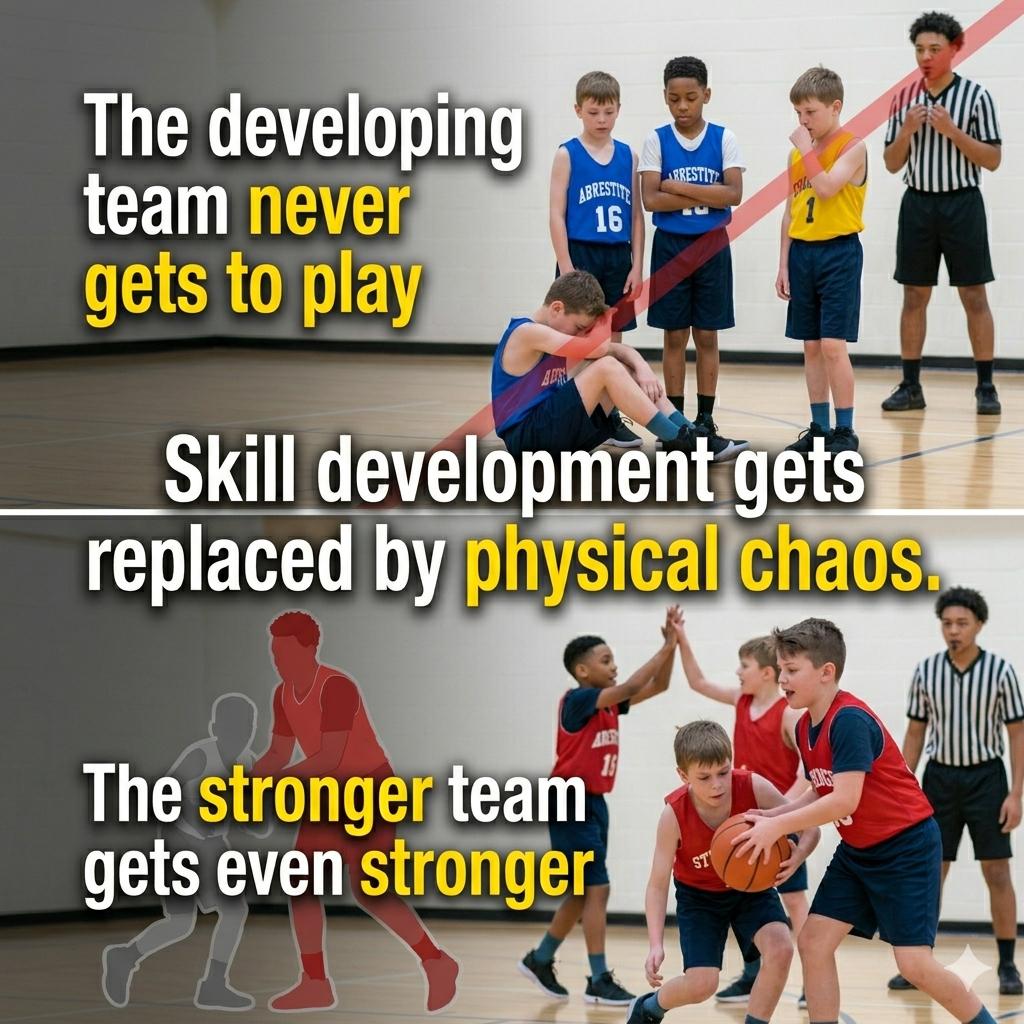
The result? The team with stronger, more physical players gets to impose that physicality with no consequences. The weaker team never develops the offensive skills to play through pressure — because they never get the chance to.
Every game like this is a lost learning opportunity for the kids who needed it most.
The One Question Every Whistle Should Answer
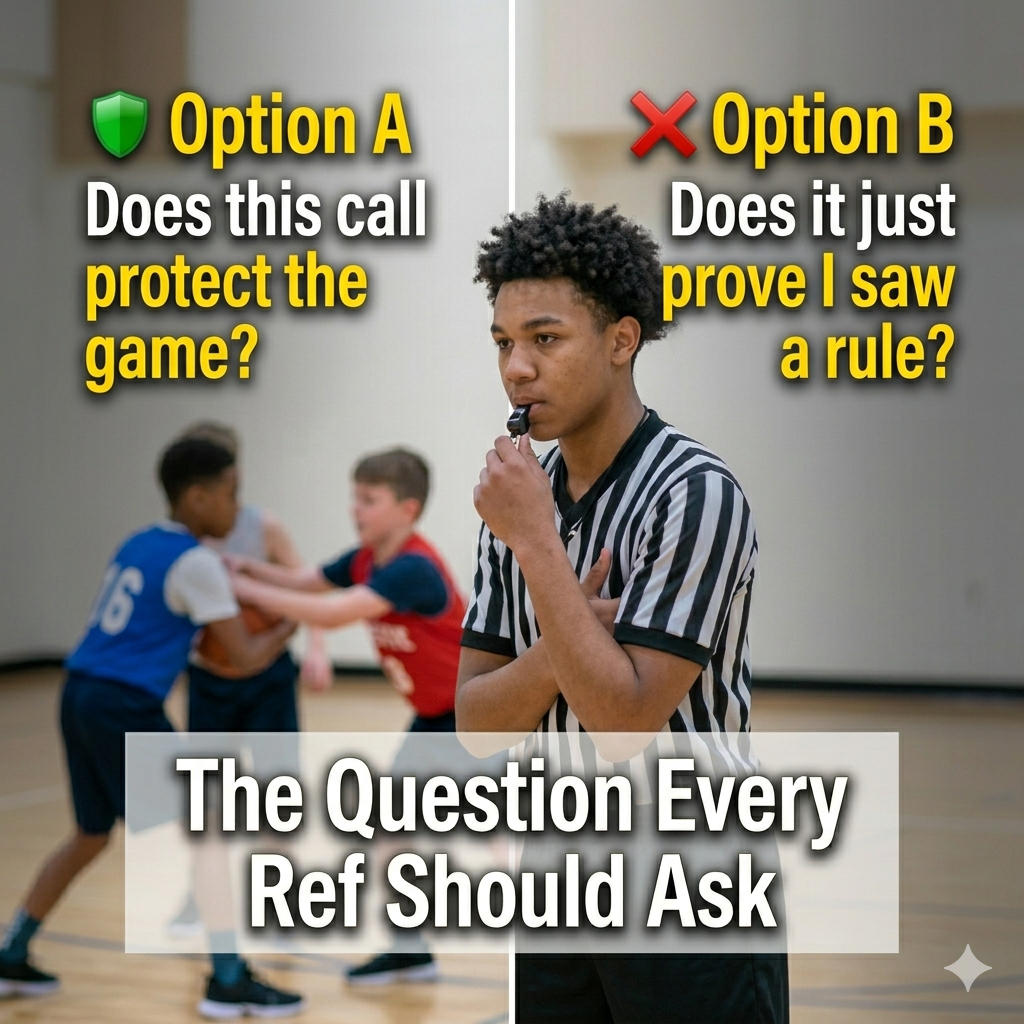
Before blowing the whistle, ask yourself one question:
Does this call help kids learn the game — or does it just prove I saw the rule?
A slight travel on a 9-year-old who just made their first move off the dribble? Letting it go and watching what they do next teaches more than stopping play. A bigger player wrapping both arms around a smaller ball handler every time they catch the ball in the post? That must be called — because it's preventing the game from happening at all.
Great Youth Refs Protect the Environment
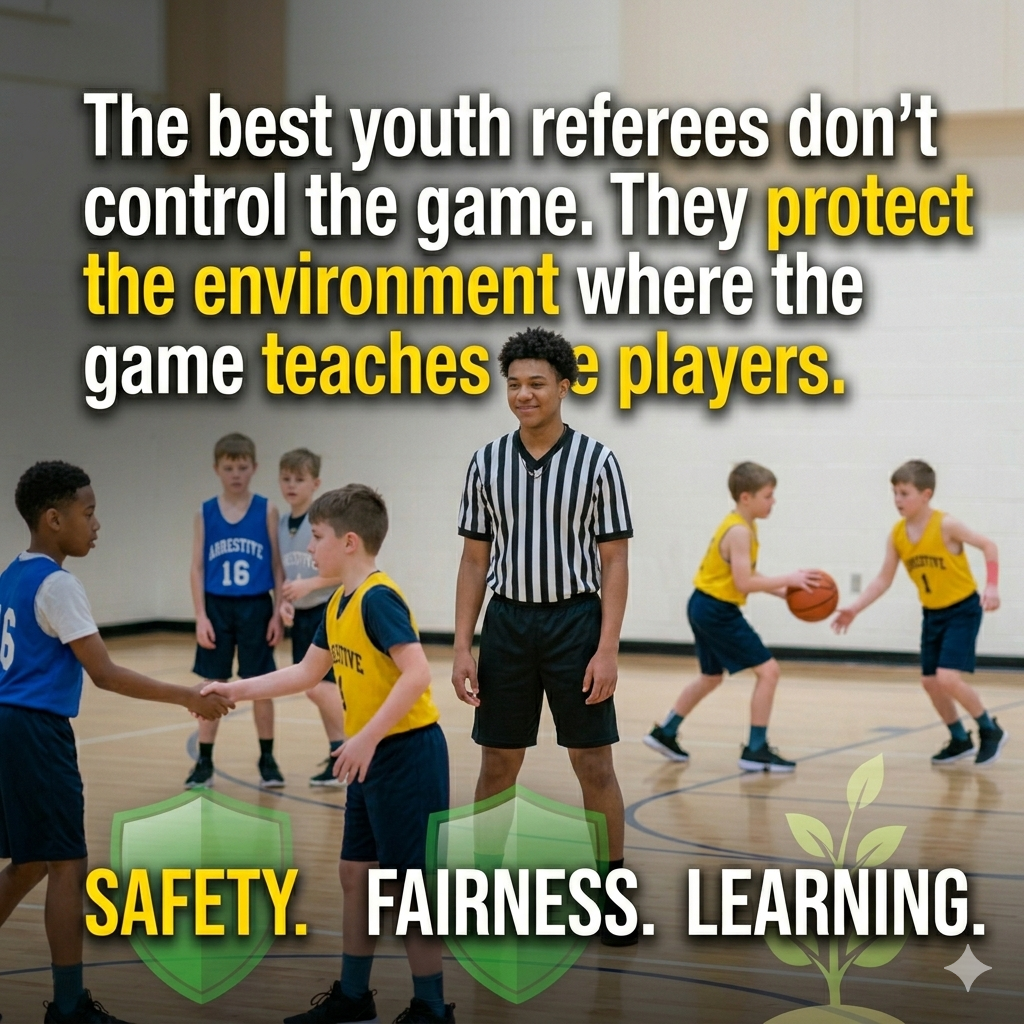
The best youth referees aren't the ones who know every rule. They're the ones who understand that their job is to protect the environment where the game can teach the players.
They're not controlling the game. They're making sure the game can do its job.
A Simple Principle to Remember
Call what creates advantage. Teach what doesn't.
If a violation gives one team an unfair edge — call it. If it's a minor technical mistake that didn't affect the play — let it go, or mention it quietly to the player without stopping the game.
For Coaches and Parents
This framing matters beyond just referees. Coaches and parents who understand this priority stack can also advocate more effectively at youth games — not to argue every call, but to keep the conversation focused on what actually develops players.
When you see borderline travel calls getting called while hand-checking goes uncalled, you're watching a referee who has their priorities inverted. It's worth understanding why that matters, and what to ask for instead.
The goal of every youth basketball game should be simple: kids leave having learned something, having been treated fairly, and having had fun playing the game.
The referee's job is to make that possible.
Ready to Find Tryouts?
Browse our directory of upcoming AAU basketball tryouts in Washington State.
Find Tryouts Near Me